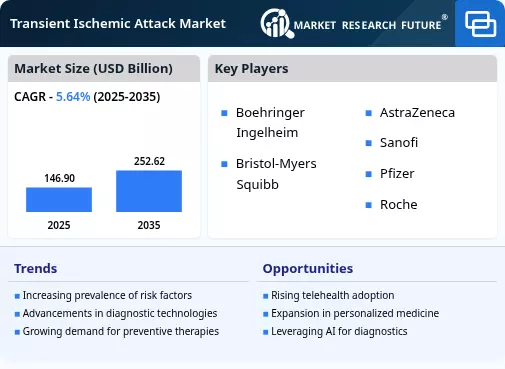
Transient Ischemic Attack Market to Surge from USD 146.9 Million in 2025 to USD 252.62 Million by 2035—Driven by Rising Stroke Incidence, Telehealth Integration
NY, CA, UNITED STATES, August 27, 2026 /EINPresswire.com/ — As per Market Research Future, the global Transient Ischemic Attack Market size is projected to reach USD 252.62 Million by 2035 from USD 146.9 Million in 2025, at a CAGR of 5.64% during the forecast period 2025–2035. The market base was estimated at USD 137.57 Million in 2024.
The 5.64% CAGR—anchored by structural shifts in cerebrovascular disease management—is propelled by three converging forces: the rising global incidence of stroke and transient ischemic attacks, with the World Health Organization indicating that approximately 15 million people suffer from stroke annually worldwide, and a significant portion experiencing transient ischemic attacks as precursors, driving healthcare providers to increasingly adopt advanced diagnostic and therapeutic interventions for early detection and stroke prevention; technological advancements in medical devices and diagnostic tools, particularly enhanced imaging techniques, biomarker identification, portable imaging technologies, and the integration of artificial intelligence in predictive analytics, which are enabling healthcare professionals to detect transient ischemic attacks more accurately and swiftly; and the growing integration of telehealth and digital health solutions, including remote monitoring and virtual consultations, that enhance patient engagement, adherence to treatment protocols, and timely access to care for individuals at risk.
Global pharmaceutical companies and health organizations are amplifying this momentum. Boehringer Ingelheim continues advancing its pipeline of anticoagulants with a new clinical trial focused on a novel anticoagulant specifically designed for patients with a history of transient ischemic attacks. AstraZeneca announced a partnership with a leading telehealth provider to develop a comprehensive digital platform aimed at monitoring patients at risk of transient ischemic attacks.
Bristol-Myers Squibb expanded its collaboration with a biotech firm to explore the use of gene therapy in preventing recurrent transient ischemic attacks. According to WHO data, approximately 15 million people suffer from stroke annually worldwide, while the United Nations projects that by 2030, the global population aged 60 years and older will reach 1.4 billion, creating a larger cohort susceptible to TIAs. These forces are creating the clinical infrastructure and patient demand on which the Transient Ischemic Attack Market depends.
Request A Free Sample:
https://www.marketresearchfuture.com/sample_request/5025
Key Market Trends & Growth Drivers
Technological Advancements in Diagnostics
The market is witnessing increasing demand driven by innovations in diagnostic tools. Recent innovations in diagnostic tools are transforming the Transient Ischemic Attack Market. Enhanced imaging techniques and biomarker identification are enabling healthcare professionals to detect transient ischemic attacks more accurately and swiftly. The advent of portable imaging technologies and advanced MRI techniques facilitates rapid identification of ischemic episodes, thereby improving patient outcomes. Furthermore, the integration of artificial intelligence in predictive analytics is enhancing risk stratification for TIA patients. This trend indicates a shift toward precision diagnostics, with advanced CT and MRI systems being recognized for their critical role in early detection and stroke prevention. AstraZeneca continues advancing digital health solutions through strategic partnerships supporting remote patient monitoring.
Increased Focus on Preventive Care
Innovations in preventive care strategies are becoming a hallmark of the industry. Healthcare systems are prioritizing education and lifestyle modifications to reduce risk factors associated with transient ischemic attacks. There is a growing emphasis on preventive care within the Transient Ischemic Attack Market, with public health campaigns and educational initiatives by health organizations aiming to inform individuals about the symptoms and risks associated with TIAs. This heightened awareness encourages early medical intervention, which is essential for preventing subsequent strokes. These advancements aim to enhance patient outcomes and reduce the long-term impact of transient ischemic attacks, potentially leading to better health outcomes and increased market penetration.
Integration of Telehealth Solutions
The incorporation of telehealth and digital health technologies into the industry is gaining traction. Remote monitoring and virtual consultations are becoming more prevalent, allowing for timely interventions and continuous patient engagement. The integration of telehealth solutions is reshaping the Transient Ischemic Attack Market, facilitating timely access to care and significantly influencing treatment pathways and patient management. This trend suggests a potential enhancement in accessibility and efficiency of care for individuals at risk, with digital platforms being utilized to monitor patient progress and facilitate communication between healthcare providers and patients.
Aging Population and Rising Risk Factors
The demographic shift towards an aging population is a crucial factor driving the Transient Ischemic Attack Market. As individuals age, the risk of cerebrovascular diseases, including TIAs, escalates. The United Nations projects that by 2030, the global population aged 60 years and older will reach 1.4 billion, creating a larger cohort susceptible to TIAs. In parallel, the rising prevalence of risk factors such as hypertension, diabetes, and obesity is contributing to a heightened focus on the market. Healthcare providers are increasingly prioritizing education and preventive measures to mitigate the incidence of these events. The market is projected to expand as healthcare systems increasingly address the growing burden of cerebrovascular disease.
Ask for Customization:
https://www.marketresearchfuture.com/ask_for_customize/5025
Market Segment Insights
BY TYPE
Atherosclerotic: Largest segment, encompassing a significant portion of TIA cases related to artery plaque buildup, which often leads to ischemic events. Boehringer Ingelheim continues expanding antithrombotic therapies through sustained product innovation.
Embolic: Fastest-growing segment, showcasing potential for increased market participation due to rising awareness, improved diagnostic methodologies, and evolving treatment options including novel anticoagulants.
Non-Atherosclerotic & Lacunar: Positioned as specialized segments catering to multifaceted therapeutic needs, including lacunar TIAs and other non-atherosclerotic pathophysiological types.
BY SYMPTOMS
Sudden Weakness: Largest symptom segment, accounting for a significant portion of cases and positioning it as the most predominant clinical presentation in the Transient Ischemic Attack Market.
Speech Difficulties: Fastest-growing symptom segment, reflecting a shifting focus in diagnosis and treatment approaches that emphasize this symptom as a critical warning sign requiring immediate clinical attention.
Vision Problems, Dizziness, and Confusion: Significant symptom categories contributing to overall market demand, driven by increasing awareness and improved diagnostic recognition.
BY RISK FACTORS
Hypertension: Largest risk factor segment, contributing to the highest portion of overall TIA incidence due to the prevalence of hypertension among individuals at risk.
Diabetes: Fastest-growing risk factor segment, with increasing rates contributing significantly to TIA market dynamics as both conditions share commonality in terms of lifestyle and metabolic syndromes.
High Cholesterol, Smoking, and Obesity: Significant risk factors driving market demand, with healthcare providers increasingly prioritizing comprehensive risk factor modification programs.
BY DIAGNOSIS METHOD
CT Scan: Dominant diagnostic method with the largest market share, driven by widespread availability and quick results, making it the preferred method for initial diagnosis of transient ischemic attacks.
MRI: Fastest-growing diagnostic segment, steadily gaining traction among healthcare professionals for its detailed imaging capabilities, enabling more accurate assessments of brain conditions and ischemic episodes.
Ultrasound and Blood Tests: Important supplementary diagnostic tools occupying specialized roles in the diagnosis of transient ischemic attacks due to their specific applications in vascular assessment and biomarker identification.
BY TREATMENT OPTIONS
Antiplatelet Therapy: Largest treatment segment, holding the dominant market share due to its established effectiveness in preventing stroke recurrence and widespread recommendation by health authorities including aspirin and clopidogrel regimens.
Anticoagulants: Fastest-growing treatment segment, rapidly gaining traction as more healthcare professionals recognize their benefits, with advancements in drug formulations and delivery methods propelling their use among patients with TIA risk factors.
Lifestyle Modifications and Surgery: Essential supportive treatment modalities including carotid endarterectomy and stenting, taking a critical role in the overall treatment regime for TIA patients alongside pharmacological interventions.
Read Detailed Insights:
https://www.marketresearchfuture.com/reports/transient-ischemic-attack-market-5025
Regional Outlook
North America — Market Leader in TIA Solutions
North America leads with 68.78% of global revenue in 2024, generating around USD 68.8 Million. The region’s growth is driven by increasing awareness of stroke prevention, advancements in medical technology, and supportive healthcare policies. According to the CDC Division for Heart Disease and Stroke Prevention, stroke remains a leading cause of morbidity and mortality in the United States. The competitive landscape is characterized by continuous innovation and strategic partnerships among leading pharmaceutical companies such as Boehringer Ingelheim, Pfizer, and Johnson & Johnson.
Europe — Emerging Market with Growth Potential
Europe was valued at EUR 38.27 million in 2024, representing a significant regional market. The region benefits from a strong regulatory framework that encourages research and development in stroke prevention and treatment, increased funding for healthcare initiatives, and a rising aging population. Regulatory bodies like the EMA are actively facilitating the approval of new therapies. Leading countries include Germany, France, and the UK, where major pharmaceutical companies such as AstraZeneca and Sanofi are heavily invested.
Asia-Pacific — Rapidly Growing Healthcare Sector
The Asia-Pacific region accounts for a significant and growing share of the global market, valued at approximately USD 25.52 million. The growth is driven by increasing healthcare expenditure, rising awareness of stroke-related conditions, and improvements in healthcare infrastructure. Countries like Japan, China, and Australia are leading the charge, supported by government initiatives aimed at improving access to healthcare services. The competitive landscape is evolving with companies like Novartis and Roche enhancing competition and innovation.
Middle East and Africa — Emerging Market with Challenges
The MEA region reached USD 5.0 million in 2024, representing a nascent but developing market. The growth in this region is supported by increasing investments in healthcare and government initiatives aimed at improving medical services, though limited healthcare infrastructure and varying levels of awareness remain challenges. Countries such as South Africa and the UAE are at the forefront of TIA management efforts, with both local and international players seeking to establish a foothold as healthcare systems improve.
Competitive Landscape and Recent Developments
The Transient Ischemic Attack market is characterized by intense competition and rapid growth, driven by increasing prevalence of cerebrovascular diseases worldwide. The global industry appears moderately fragmented, with several key players exerting significant influence.
KEY COMPANIES AND RECENT MILESTONES
AstraZeneca (GB) (November 2025): Announced a partnership with a leading telehealth provider to develop a comprehensive digital platform aimed at monitoring patients at risk of transient ischemic attacks. This strategic move is likely to enhance patient engagement and adherence to treatment protocols, positioning AstraZeneca as a frontrunner in the integration of technology within the healthcare continuum.
Boehringer Ingelheim (DE) (October 2025): Launched a new clinical trial focused on a novel anticoagulant specifically designed for patients with a history of transient ischemic attacks. This initiative reflects the company’s commitment to research and development and highlights the potential for improved therapeutic options in a market that demands effective and safe treatments.
Bristol-Myers Squibb (US) (September 2025): Expanded its collaboration with a biotech firm to explore the use of gene therapy in preventing recurrent transient ischemic attacks. This strategic action indicates a shift towards innovative therapeutic modalities that could redefine treatment paradigms and potentially lead to groundbreaking advancements in patient care.
Other Key Players: Sanofi (FR), Pfizer (US), Novartis (CH), Roche (CH), Johnson & Johnson (US), Merck & Co. (US).
Future Outlook: 2025–2035
The Transient Ischemic Attack Market is projected to reach USD 252.62 million by 2035, growing at a CAGR of 5.64%, driven by increasing stroke incidence, rising aging population, and advancements in diagnostic and therapeutic technologies.
New opportunities lie in:
Development of AI-driven diagnostic tools for early detection of transient ischemic attacks
Expansion of telehealth services for remote patient monitoring and continuous engagement
Investment in personalized medicine approaches for tailored antithrombotic therapies
Integration of digital health platforms to enhance patient adherence and treatment outcomes
Exploration of gene therapy and novel biologics for preventing recurrent TIAs
By 2035, the Transient Ischemic Attack Market is expected to achieve substantial growth and innovation, reflecting enhanced treatment modalities, increased patient engagement, and a continued shift toward proactive cerebrovascular care.
More Related Research Insights:
https://www.marketresearchfuture.com/reports/antibody-drug-conjugate-market-1113
https://www.marketresearchfuture.com/reports/otc-drugs-market-43711
https://www.marketresearchfuture.com/reports/softgel-capsule-market-7467
https://www.marketresearchfuture.com/reports/preimplantation-genetic-testing-market-8121
https://www.marketresearchfuture.com/reports/drug-discovery-informatics-market-7831
https://www.marketresearchfuture.com/reports/clinical-decision-support-systems-market-6038
https://www.marketresearchfuture.com/reports/antibiotics-market-8447
https://www.marketresearchfuture.com/reports/contrast-media-market-1284
https://www.marketresearchfuture.com/reports/botulinum-toxin-market-8567
https://www.marketresearchfuture.com/reports/autoinjectors-market-6311
Market Research Future
Market Research Future
+1 855-661-4441
email us here
Legal Disclaimer:
EIN Presswire provides this news content “as is” without warranty of any kind. We do not accept any responsibility or liability
for the accuracy, content, images, videos, licenses, completeness, legality, or reliability of the information contained in this
article. If you have any complaints or copyright issues related to this article, kindly contact the author above.

Media gallery